
introduction
Choosing a dental implant today is no longer just about replacing a missing tooth — it’s about selecting a biomaterial that will stay inside your body for decades.
Patients traveling to Istanbul for treatment often ask one critical question:
Should I choose titanium or zirconia implants?
Leading centers such as Dream Clinica evaluate this decision medically — not cosmetically — because each material behaves differently inside bone and soft tissue over long-term healing (osseointegration).
In this comprehensive guide, you will understand the real differences, longevity expectations, biological response, and which implant fits your personal case.
What Are Dental Implants Made Of?
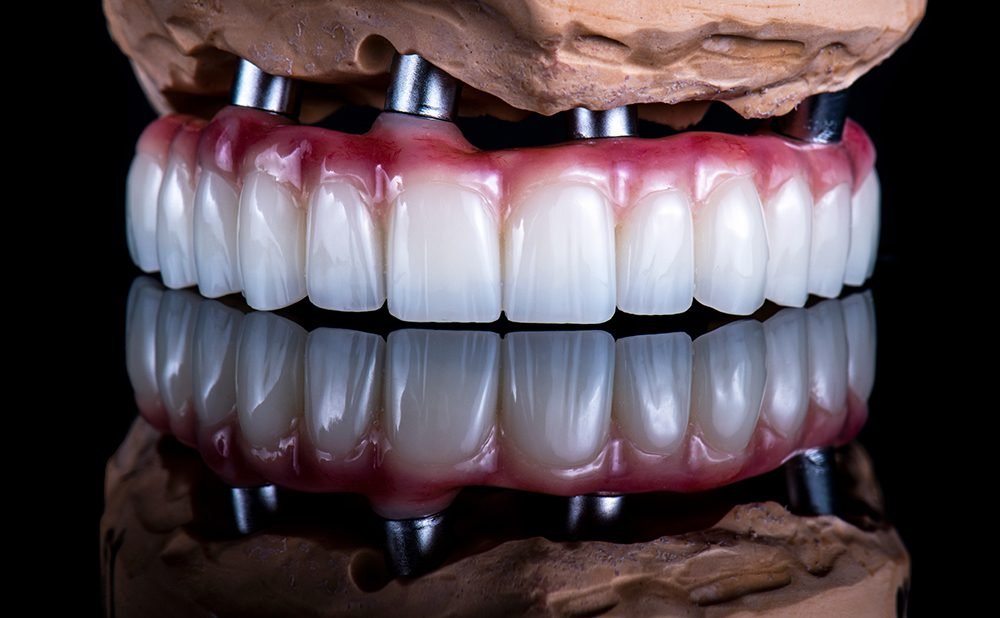
A dental implant is an artificial tooth root placed inside the jawbone to support a crown, bridge, or full-arch prosthesis.
Two primary materials exist today:
- Titanium implants (metal implants)
- Zirconia implants (ceramic implants)
Both integrate with bone through osseointegration, but their biomechanical behavior is very different.
Titanium Implants (The Gold Standard)


Advantages
1) Proven long-term success
Used for over 50 years with a survival rate above 95%.
2) Strong and flexible (biomechanical elasticity)
Titanium slightly flexes under pressure, reducing fracture risk.
3) Ideal for complex cases
Works best for:
- full mouth implants
- bone graft cases
- All-on-4 / All-on-6
- bruxism patients
4) Easier repairability
Parts can be replaced without removing the implant.
Disadvantages
- Metallic color under thin gums
- Rare metal sensitivity in extremely few patients
- Can transmit cold/heat slightly
👉 Best choice for durability and heavy chewing force.
Zirconia Implants (Metal-Free Alternative)

Advantages
1) Perfect aesthetics
White color prevents gray shadow at gum line.
2) Excellent gum compatibility (biocompatibility)
Lower plaque accumulation and healthier soft tissue response.
3) Metal-free solution
Preferred by patients with metal sensitivity concerns.
4) Thermal insulation
No temperature conduction.
Disadvantages
- Less flexible → higher fracture risk under extreme force
- Requires higher bone quality
- Limited long-term studies compared to titanium
- Harder to adjust prosthetically
👉 Best for front teeth and highly aesthetic cases.
Direct Comparison Table
| Feature | Titanium | Zirconia |
|---|---|---|
| Longevity | 20+ years | 10–20 years |
| Strength | Very high | High but rigid |
| Aesthetics | Good | Excellent |
| Gum health | Excellent | Superior |
| Fracture resistance | Very high | Moderate |
| Full mouth cases | Ideal | Limited |
| Allergy risk | Extremely rare | None |
| Scientific evidence | Extensive | Growing |
Which Implant Feels More Natural?
Patients often report:
- Titanium → stronger bite confidence
- Zirconia → more natural appearance near gums
But natural function depends more on implant planning and positioning than material alone.
When Do Dentists Prefer Each One?
Titanium recommended if:
- Full arch restoration
- Bone graft required
- Bruxism
- Strong bite
- Posterior teeth
Zirconia recommended if:
- Front teeth replacement
- Thin gum biotype
- High smile line
- Metal-free preference
Why Proper Planning Matters More Than Material
Material alone does not guarantee success.
Digital planning (3D CBCT + surgical guides) determines:
- implant angle
- load distribution
- long-term bone preservation
Advanced clinics in Istanbul now focus on biomechanical planning rather than simply offering a material choice.
Final Verdict
There is no universal winner.
Titanium = strength & longevity
Zirconia = aesthetics & biocompatibility
The correct choice depends on your bite force, bone structure, and cosmetic expectations — not trends or marketing.
That is why experienced implant centers design the treatment around your anatomy first, then select the material.